
Furniture That Survives Short Lets

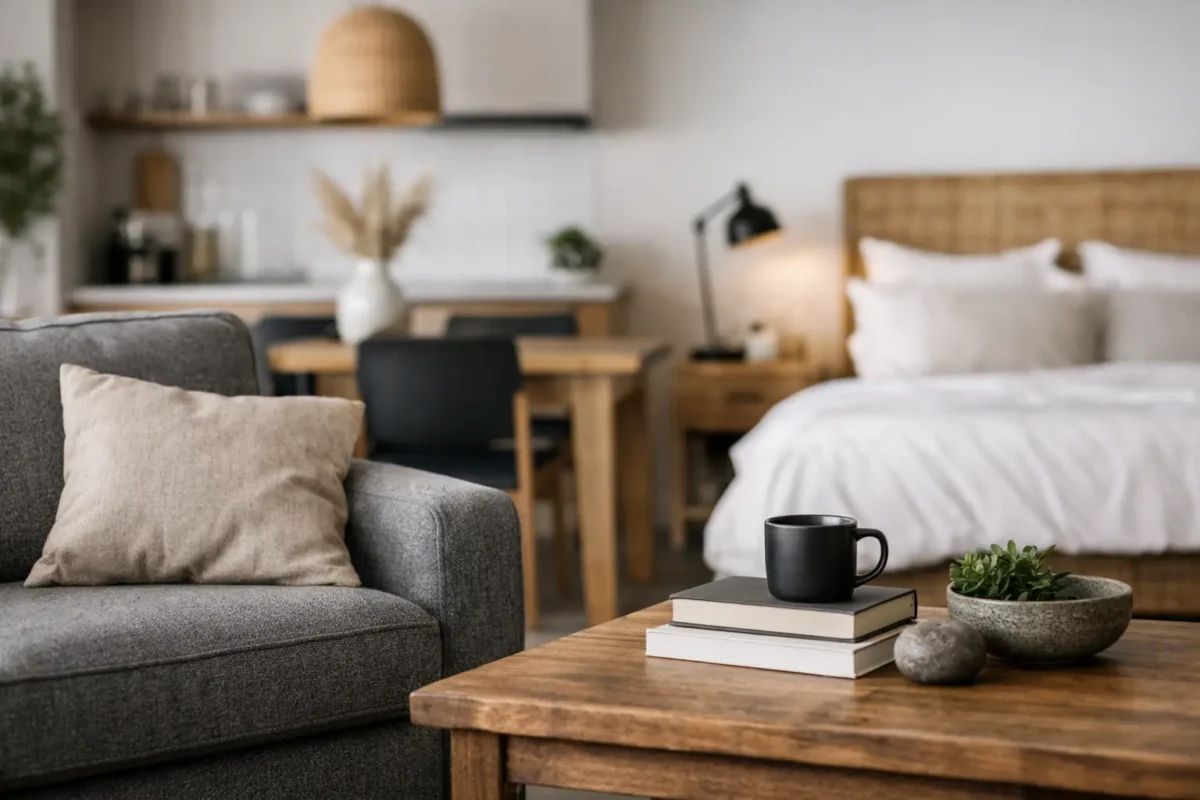
The fastest way to lose money on a short let is not poor occupancy. It is buying the same furniture twice. Furniture that survives short lets is rarely the prettiest piece in a showroom. It is the piece with the right frame, the right finish and the right dimensions for the way strangers actually use a room.
That matters because short-let wear is not normal domestic wear. Guests sit on the arm of the sofa while putting on shoes. They drag dining chairs one-handed across tile. They put wet glasses on oak veneer and a hot hair tool on a bedside table. If you furnish as though an owner will live there carefully for ten years, you will be replacing half the scheme in eighteen months.
What furniture that survives short lets really means
Durability is only part of it. Furniture that survives short lets also needs to be easy to clean, quick to replace, visually forgiving in photographs and inexpensive enough to protect yield. Those goals pull against each other.
A solid oak dining table sounds sensible, until you realise a 220 cm plank top shows every pale water mark and costs far more to swap than a well-made oak-veneered top with a repairable matt lacquer. A pale bouclé sofa may photograph nicely for one launch week, then trap fake tan, red wine and mascara in the first month. The right answer is usually not the cheapest option or the most expensive one. It is the one designed for repeat abuse and ordinary maintenance.
In practice, I look at five things first: frame construction, weight, finish, fabric composition and the cost of failure. The cost of failure is the useful test. If this item is damaged on a Friday in August, can you clean it, repair it or replace it without cancelling a booking?
Start with the pieces that fail first
In most short lets, the first casualties are the sofa, dining chairs, bedside tables and headboards. Not because they are badly made, always, but because they take concentrated use.
A sofa for a short let should have a kiln-dried hardwood or engineered timber frame, fixed back cushions where possible, and seat cushions with high-resilience foam wrapped lightly rather than deep feather toppers. Feather looks generous on day one and tired by day thirty unless someone plumps it daily. That person is not your guest.
For upholstery, commercial-grade polyester blends, solution-dyed acrylics and tight woven fabrics tend to outperform linen and cotton. Linen creases, catches and marks too easily for this setting. If you want the look of a relaxed natural cloth, choose a textured synthetic with at least 40,000 Martindale rubs. In a family holiday house I would rather see a warm stone performance weave than an earnest oatmeal linen already heading for the bin.
Dining chairs fail for a simpler reason: joints loosen. If a chair has elegant but spindly legs and a low weight, guests will lean back in it. Choose chairs with welded metal frames or properly dowelled timber frames, and avoid anything that relies on a delicate floating seat detail. A chair that weighs 6.5 to 8 kg often survives better than one at 4 kg because it does not skitter across the floor every time someone stands up.
The best materials are the ones that hide their own age
There is no prize for choosing a material that looks immaculate only when new. In short lets, the best finishes are the ones that wear gracefully.
Timber with an open grain and mid-tone stain is more forgiving than dark espresso or very pale raw oak. Mid walnut, smoked oak and warm chestnut all disguise minor knocks better than black-stained ash, which shows every chip as a pale line. On table tops, a super-matt lacquer or hardwax oil can work well, but only if your housekeeping team knows the maintenance routine. If they do not, a hard commercial lacquer is the safer choice.
Powder-coated steel is useful on side tables, dining bases and bed frames because it resists chipping better than plated finishes. Brass plating can look smart and then start to show wear where suitcase corners strike it. Similarly, sintered stone and compact laminate are often better worktop or table choices than marble in high-turnover properties. Marble etches. Guests do not care that the ring mark was made by lemon juice rather than neglect.
Glass deserves a brief mention. A smoked or bronzed glass coffee table can look expensive in a photograph, but it records fingerprints, chips on corners and every careless suitcase. Unless the property is lightly used and tightly managed, I would rather use timber, laminate or stone composite.
Upholstery is where most short-let budgets go wrong
The common mistake is spending too much on shape and too little on fabric performance. Guests do not reward hand-stitched detailing. They do notice whether the sofa feels clean and whether the dining chair wobbles.
Look for removable covers where the design allows it, especially on dining pads and loose bedroom chairs. In a busy two-bedroom short let, a spare set of covers can be worth more than a more expensive chair. You are buying continuity, not just furniture.
Colour matters as much as fibre. Mid tones are the sweet spot. Chalk, ivory and biscuit look fresh until they are not. Charcoal can show lint and sunscreen marks. Olive, taupe, rust, mushroom and warm grey generally age better. Pattern can help too, if it is quiet. A small-scale weave or broken stripe hides marks better than a flat plain. This is one place where a little visual texture does real work.
Leather is often suggested as the answer. Sometimes it is. Corrected-grain or protected leather on a dining seat can be practical, especially in darker cognac or umber tones. On a whole sofa, it depends on climate and brand positioning. In hot coastal locations it can feel sticky, and in cheaper grades it scratches unattractively. If the property is sold on softness and ease, a performance fabric usually reads better.
Size and layout do more for longevity than people expect
A good deal of furniture damage is layout damage. The piece is fine. The room asks too much of it.
If the route from the front door to the bedroom requires a suitcase to clip a console table on every arrival, that console will not last. If the dining table is oversized for the room, guests will drag chairs at awkward angles and strain the joints. If bedside tables are too small, phones, water bottles and hot tools end up balanced on edges.
For most short lets, I would rather slightly underspecify scale than overspecify it. Leave 90 cm where people need to pass comfortably. Give each side of a double bed a proper table, ideally 45 to 55 cm wide. Use a dining table with enough overhang for knees and stable legs at the corners or a single pedestal that does not force chairs into the base.
Headboards are another quiet problem. Upholstered headboards can be excellent acoustically and visually, but make them simple, tightly upholstered and easy to wipe around. Deep channelled or heavily piped designs collect dust and suntan lotion. Timber or laminate bedside surfaces paired with an upholstered headboard is often the more sensible split.
Buy in ranges, not one-off heroes
The furniture that survives short lets is usually part of a system. That sounds dull. It saves money.
If a bedside table breaks, you need the same one or a close sibling still in production. If every piece is a one-off from a different maker, replacements become a scavenger hunt. Better to use dependable ranges from established houses and mix them carefully. Think of it as controlled repetition.
This is where many private hosts furnish like homeowners and regret it. They buy the statement armchair, the interesting artisan side table, the delicate ceramic lamp. Three seasons later, one is stained, one is cracked and one has no matching replacement. A commercially literate scheme uses good-looking staples from makers with continuity. The room still reads as considered, but the back end works.
There is a dry rule I use: spend your visual capital on one or two things guests remember, then make the rest durable and replaceable. In a short let that might mean a handsome headboard wall and proper curtains, while the casegoods remain simple, stable and easy to source again.
A note on coastal properties, because they behave differently. Salt air punishes metal fixings, timber movement is greater, and bright light can bleach fabrics faster than you expect. In the Algarve, for instance, I would be cautious with untreated iron, low-grade veneers and blue-heavy greys that go cold under strong sun. Outdoor-grade fabrics used selectively indoors, particularly in dining banquettes or window seats, can be a sensible insurance policy.
If you furnish property as a commercial decision, buy for the fourth guest, not the first photograph. The room still needs to look good, of course. But the pieces earning their place are the ones that can be cleaned on a changeover day, repaired without drama and replaced without redesigning the whole scheme. That is the useful standard. If you are reviewing a scheme now, start with the sofa, the dining chair and the bedside table. They will tell you quickly whether the room is built for letting or merely dressed for launch.